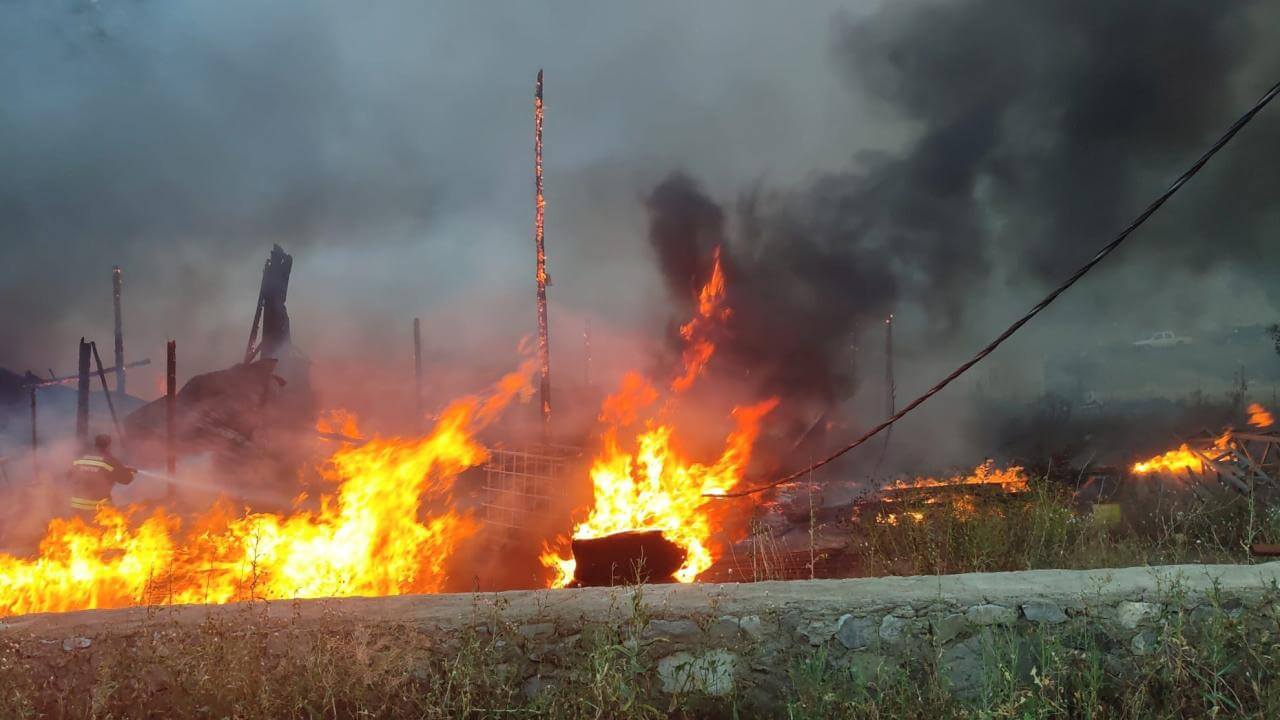
Chemical Fire & Flammable Analysis
Investigation of chemical reactions and flammable liquid fires. Advanced GC-MS testing to distinguish between industrial accidents and deliberate arson.
Forensic Analysis of Chemical and Industrial Fires
Chemical fire and flammable-substance analysis is the process of determining the role of chemical reactions and accelerants in industrial facilities, storage areas, or suspicious fire scenes. Our expert team performs precise tests on samples taken from the scene to scientifically prove whether the fire resulted from self-heating (an exothermic reaction), improper storage, or the use of an external flammable substance (arson).
Laboratory Examinations Performed and Process
In cases involving suspected chemicals or flammable substances, our expert teams and accredited laboratory processes follow these critical steps:
Accelerant and Residue Detection
Samples taken from porous surfaces, wood, textile, and concrete residues at the fire scene are analyzed with GC-MS (Gas Chromatography-Mass Spectrometry) devices to detect traces of hydrocarbon-based flammable substances such as gasoline, thinner, kerosene, or alcohol.
Spontaneous Combustion and Chemical Compatibility Testing
Particularly in industrial facility fires, the risk of stored chemicals reacting with one another, exothermic (heat-releasing) decomposition caused by moisture and temperature, and self-ignition dynamics are simulated to determine the root cause.
Toxic Gas and Pyrolysis Product Analysis
The dispersal path of gases released during the fire and the thermal decomposition (pyrolysis) products of materials are examined to technically report whether the fire began with an explosion, or whether an explosion phase occurred after the fire started.
Why Chemical and Accelerant Analysis?
In arson cases, perpetrators typically use high-heat flammable substances to destroy evidence. However, modern forensic methods can never fully erase the microscopic chemical traces (petroleum derivatives) hidden beneath ash and carbonized layers. This finding can directly alter the course of a judicial proceeding.
"In short: chemical fire and flammable-substance analysis decodes evidence at the molecular level, providing judicial authorities, industrial facilities, and insurance bodies with scientific reports that leave no room for doubt."
- Service Duration
- Depends on chromatography analysis (avg. 4–7 days)
- Reporting
- Compliant with Forensic, Industrial, and Official Standards
- Coverage
- All of Turkey