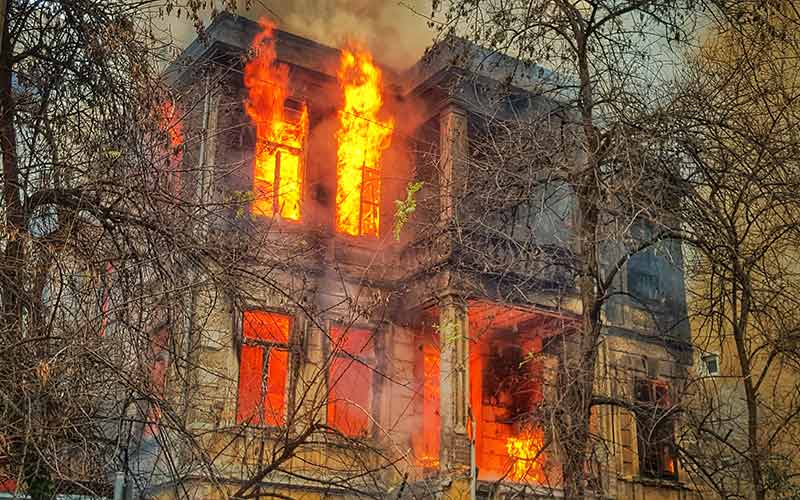
What Is Fire Load? (The Thermal Energy Pool)
Fire load is the mathematical expression — measured in MJ/m² or kcal/m² — of the total weight of all combustible materials present in an enclosed space or structure, including furniture, floor coverings, textiles, decorative materials, and even the building's structural wood/plastic components, together with their heats of combustion. In simple terms, fire load represents the total 'thermal energy pool' and amount of heat a room could generate during a fire. The higher a structure's fire load, the greater the heat energy, duration, and surrounding destruction a fire can produce.
The Critical Role of Fire Load in Forensic Investigation
Forensic fire investigators do not merely gather observational evidence from devastated debris — they mathematically simulate the scene. Fire load analysis serves three core purposes here:
The rate at which items inside a structure would normally burn and the maximum heat they could generate (heat release rate — HRR) under normal conditions is well established. If a fire's growth and spread rate in a room far exceeds the theoretical limits of that room's existing fire load, experts immediately suspect external intervention — that is, the use of liquid fuels (gasoline, thinner, etc.) artificially accelerating combustion.
The condition of melted metals in the debris (such as aluminum window frames or steel beams) is used to estimate the temperature the room reached. Fire-load calculations determine whether the materials in the room alone could have generated this temperature. If two sofas and a rug could not produce enough thermal power to melt a steel beam, the presence of a hidden heat source is confirmed.
Particularly in industrial and factory fires, the fire load declared at the design stage is compared against the actual fire load present at the time of the fire. If the facility stored far more flammable raw material than declared on its permit, causing the sprinkler (automatic suppression) system to be inadequate, legal fault and insurance liability fall directly on the business.
How Is the Mathematical Modeling Performed?
In fire forensics, this analysis is simulated with advanced computer-aided CFD (Computational Fluid Dynamics) software. The process proceeds through the following steps:
The type and mass (kg) of materials in the room are established from pre-fire floor plans, invoices, or witness statements.
The net calorific value of each material (e.g. ~18 MJ/kg for wood, ~24 MJ/kg for polyurethane foam) is multiplied by its total mass to calculate the room's total energy in megajoules (MJ), which is then divided by floor area to obtain the fire load per square meter.